Hidden Damage in Aluminum and Carbon Fiber: What the Naked Eye Cannot Tell You
Collision repair has always required technicians to look beyond the obvious. With conventional steel, visible deformation is typically a reliable guide to where damage exists and how severe it is. But as automakers push aluminum and carbon fiber into higher volumes across their fleets, that assumption breaks down — often in ways that cannot be detected without specialized equipment.
P&L Consultants co-owner Larry Montanez walked through the implications of both materials during a "Repair University Live" episode, and the message for shops is clear: what you cannot see can still fail.
Aluminum: Microfractures and the Limits of Visual Inspection
Ducker Worldwide projected that 25 percent of automotive doors and 71 percent of hoods would be aluminum by 2020. That's a lot of material arriving in collision shops with properties very different from the steel it replaced.
Montanez draws a clear line between aluminum forms: extruded and cast aluminum components are effectively replace-only. Attempting to repair them — particularly by welding — creates problems at the microscopic level that no amount of visual inspection will reveal.
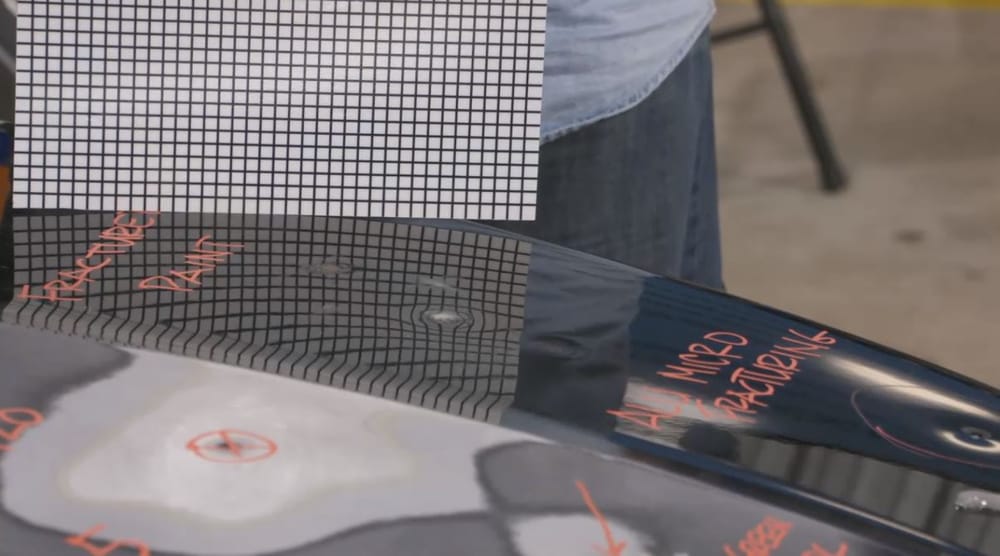
A fracture in cast aluminum triggers microfractures throughout the surrounding area. Apply a welder to that zone and you're not fixing it — you're generating "little tiny explosions" that create additional microfractures throughout the part. The result is a repair that may look acceptable on the surface while harboring structural compromises that will eventually manifest as failure.
Sheet aluminum panels present a different but related challenge. These materials are prone to microcracking, and tearing is common in impact zones. A shop might look at a torn panel and conclude it can be welded and filled. Montanez's assessment: "It's not going to last."
The heat involved in welding a 0.9mm aluminum outer panel causes cracking on the surface and reduces the material thickness in damaged areas to 0.6-0.7mm. The combination of heat cracking, thinning, and work hardening in that zone means repairs near the edge of a panel in particular are at high risk for re-cracking.
Heat Application: A Necessary but Dangerous Tool
Aluminum dent repair often does require some heat — that's part of working with the material. But the temperature parameters are narrow and the consequences of getting it wrong are immediate.
Aluminum melts at less than half the temperature steel does, and it begins losing structural integrity well before that melting point. When heat is applied, it must be done with precision.
Montanez's rules are straightforward:
- Never use propane torches. Propane introduces moisture into the expanded aluminum molecules.
- Never quick-cool the metal. Rapid temperature drops create microfractures.
- Let it cool naturally. This takes longer, but attempting to speed the process damages the material.
The paint on the surface can serve as a diagnostic indicator: cracked paint from rapid cooling is a reliable sign that the substrate has been similarly compromised. "If the paint's cracked like that … there's a major, major, major issue," Montanez said.
Microfluxing Dye Kits: A Non-Negotiable Tool
For shops performing structural aluminum work — particularly any welding — Montanez argued that a microfluxing dye kit is mandatory equipment, not an optional upgrade.
The example he used is instructive. The Porsche Panamera 970 features cast aluminum joined to extruded aluminum front rails. Porsche's own repair procedures require a dye test of the part following any relevant work, specifically to detect microfractures that could compromise the vehicle's crashworthiness in a future collision. If Porsche writes that requirement into their procedure, it's not a suggestion.
Carbon Fiber: Damage That Doesn't Show
Carbon fiber presents a different category of challenge. Unlike steel or aluminum — which deform visibly when impacted — composite materials can absorb impact, pop back into shape, and appear completely undamaged to the naked eye while harboring internal structural failure.
General Motors body structures advanced composites engineering group manager Mark Voss presented test data that makes this concrete. In one test, a Corvette C6 hood struck with a pedestrian test dummy showed the interior of the hood "completely destroyed" — while the exterior appeared undamaged.
In a second test, a carbon fiber hood impacted against a barrier at 35 mph popped back into place post-collision. External appearance: good as new. Actual condition: damaged in ways only visible through tools like a micrograph.
Voss was direct about the implication for photo estimating: if OEMs begin substituting composite panels for steel or aluminum on more mainstream vehicles, a photo of an undamaged-looking hood tells the estimator essentially nothing about the actual condition of the part.
"There was no easy answer on how to tell if a composite part was undamaged," Voss acknowledged. Until better detection methods are available at the shop level, the conservative path is to treat any composite part that has been in a collision as suspect — regardless of appearance.
Voss noted that promising detection technologies exist, including dye-based approaches similar to those used for aluminum microfracture testing. But those methods need to be practical and accessible for the collision repair environment before composites can move into mainstream production volumes with confidence.
What This Means for Your Shop
The trajectory of vehicle material evolution is clear. Aluminum percentages in door panels, hoods, and structural components will continue to rise. Carbon fiber, once limited to low-volume performance and luxury vehicles, is working its way toward broader adoption.
For collision repairers, this means:
- Visual inspection alone is insufficient for aluminum and composite components
- Proper dye testing for structural aluminum work is not optional where OEMs require it
- Quick-cooling aluminum during repair creates damage that may not be visible until the part fails
- Carbon fiber appearance cannot be taken as confirmation of structural integrity
Shops that invest in the right tools and training for these materials now are building the capability the industry will demand as these vehicles become more common in the repair mix.
