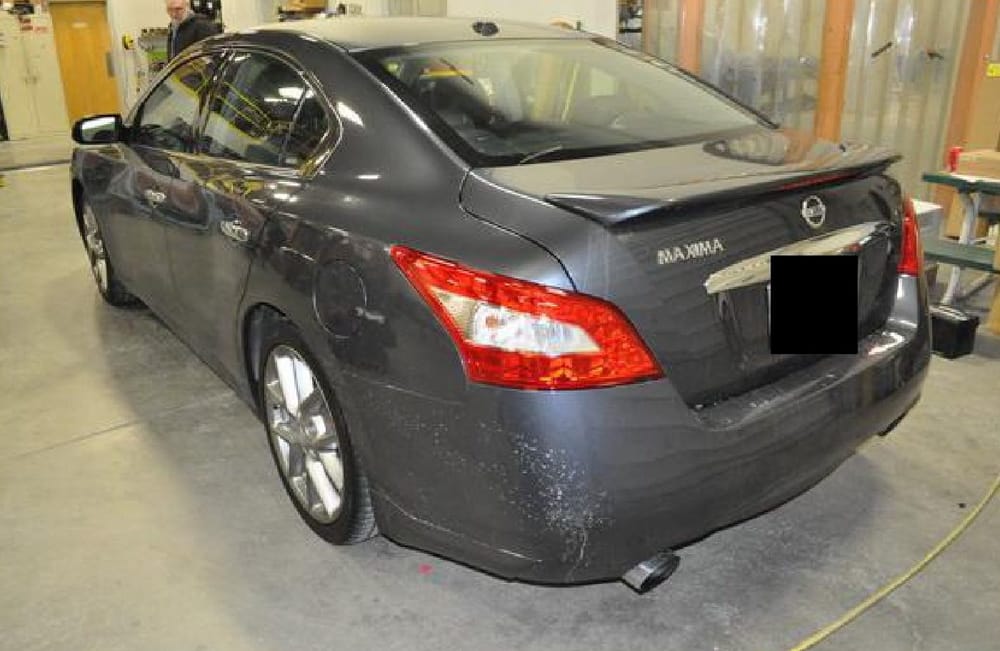
Ignoring OEM Repair Procedures Cost This Ohio Shop Over $100,000 in Court
An Ohio appellate court ruling has handed the collision repair industry a sobering reminder: bypassing manufacturer-specified repair procedures isn't just a technical shortcut — it's a legal liability that can turn a modest jury award into a six-figure judgment once attorney fees are factored in. The case of Williams v. Sharon Woods Collision stands as one of the clearest legal precedents for why following OEM procedures isn't optional.
Background: A 2010 Nissan Maxima and a Botched Repair
In 2012, customer Jeremy Williams brought his 2010 Nissan Maxima to Sharon Woods Collision in Ohio for repair after a collision. What followed was a repair that multiple experts would later characterize as structurally unsound, incomplete in several areas, and executed in an unworkmanlike manner.
The shop — operating at the time under prior owner Bernie Burckard, not the current Sora's Sharon Woods Collision Center & Service — had represented to customers that it performed all work to automotive specifications, that its technicians held I-CAR Gold Class certification, and that it repaired vehicles according to I-CAR guidelines.
A post-repair inspection told a different story. According to the trial court record, the shop had used structural bonding adhesive to attach panels to the vehicle — a method not approved by Nissan and inconsistent with I-CAR guidelines. Three separate expert witnesses testified at trial that the car had not been repaired in accordance with Nissan's procedures, that some items listed in the estimate had not been completed at all, and that the quality of the work that was performed was sloppy and unprofessional.
One expert stated the vehicle was not crashworthy following the repair due to the improper use of adhesive and the shoddy quality of the work. Another assessed its diminished value due solely to the bad repair at $9,337.50. A third concluded the vehicle was "worthless post repair."
Williams stopped driving the car entirely because of concerns about its safety.
The Jury Verdict and What It Found
Williams sued in 2014, alleging violations of Ohio's Consumer Sales Practices Act (CSPA) and Motor Vehicle Repair Rule, along with fraud. The jury found the shop had violated the CSPA in ten distinct ways — everything from misrepresenting the standard of repairs performed, to failing to complete work listed on the estimate, to returning the vehicle in an unsafe condition, to failing to provide an itemized list of repairs and to tender replaced parts.
The jury did not find fraud, but found the CSPA violations in abundance. The raw jury award was $8,079.78 — but that number bore little resemblance to the final judgment.
How $8,000 Became $105,000: Attorney Fees Under the CSPA
Under Ohio's Consumer Sales Practices Act, when a supplier is found to have knowingly committed a violation, the court can award attorney fees covering all claims arising from a common core of facts — not just the claims specifically tied to the intentional violations.
Hamilton County Court of Common Pleas Judge Mark Schweikert agreed to triple damages on certain items and awarded attorney fees and costs that, combined with the underlying damages, drove the total judgment to $105,462.59. He noted that courts had long rejected the argument that attorney fees must be proportional to the jury award, citing Ohio Supreme Court precedent holding that the purpose of fee-shifting is to eliminate financial incentives for suppliers to engage in deceptive practices.
The shop appealed, arguing that attorney fees should have been limited only to claims where knowing conduct was explicitly found. The appellate court rejected that position. Judges Russell Mock, Dennis Deters, and Marilyn Zayas of the Ohio First District Appellate Court held unanimously that when claims are factually intertwined — as they inevitably are in a repair negligence case — the court is permitted to award fees for all time reasonably spent pursuing any of the claims.
Diminished Value Survived the Appeal Too
The shop had also challenged the jury's ability to consider diminished value, arguing that the customer had failed to establish the vehicle's pre-repair value. The appellate court declined to accept that framing, holding that the CSPA is a remedial statute that must be construed liberally in favor of the consumer. Expert testimony documenting both the cost of correct re-repair and the diminished value due to the improper work was sufficient to send the question to the jury.
The fact that Williams later sold the car to a dealer — who resold it for profit — did not constitute grounds for a new trial, the court held. The vehicle's post-trial disposition was irrelevant to the question of its condition at the time of trial.
What Ohio Repairers Need to Understand
The appellate decision has significant implications beyond the parties to this case. Under the logic of the ruling, a shop that is aware that OEM procedures exist but makes a deliberate choice not to follow them could be found to have knowingly committed a CSPA violation when it delivers the vehicle — and that finding would trigger fee-shifting across all other violations in the case, regardless of intent.
The only escape from the attorney fee provision would be genuine ignorance that a right way to repair the vehicle exists — and that's not an argument any I-CAR-certified shop credibly makes.
The practical message for Ohio collision repairers is this: knowing OEM procedures are required and choosing not to follow them isn't a business decision. It's an act that can turn a small dispute into a six-figure legal liability and expose the shop to years of litigation.
