Lessons from a Shop's First Aluminum F-150 Repair: Transparency, Expertise, and Rate Disputes
When an aluminum Ford F-150 — the first the shop had ever worked on — came through the doors of Alan's Collision Center in Philadelphia, general manager Jim Pfau made a decision that reflects the kind of industry transparency collision repair rarely sees: he posted the entire repair process to social media, invited feedback, and crowdsourced expertise from some of the most experienced aluminum repair specialists in the country.
Going Public to Improve the Industry
Pfau's decision to publish video and images of the repair on YouTube and the shop's Facebook page wasn't self-promotion — it was a deliberate effort to get peer input and demonstrate that the work was being done correctly.
"This allowed the repair to be transparent and exchange information," Pfau wrote to Repairer Driven News.
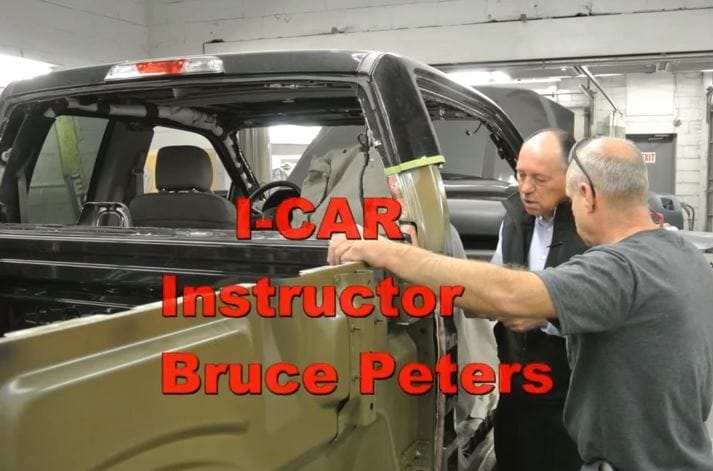
The shop replaced the right bed side, outer wheel house, front panel of the bed, and the right side aperture panel. Pfau reached out to prominent industry experts including I-CAR's Larry Montanez, Shawn Collins, and Jamie Boettcher, who had been involved in designing the Ford-I-CAR certification program for aluminum F-150 repairs.
"I wanted all hands on deck," Pfau wrote. "Since this was our first F-150, the next one will take much less time."
The decision to go transparent paid off immediately: Boettcher reviewed the images and identified a couple of repair errors. Alan's Collision corrected both before completing the job.
"I am very concerned that this truck will not be repaired correctly in the field," Pfau wrote. His concern wasn't just about his own shop — it was about the industry's overall readiness for a vehicle that was already generating significant collision repair volume.
The Equipment and Training Investment
Pfau provided a frank accounting of what it costs to be properly equipped for aluminum F-150 repairs. The required setup included a dedicated curtained work area, aluminum-certified welder, and rivet gun — totaling approximately $50,000 in equipment cost alone. Training added another $2,000.
That investment needs to be reflected in the labor rate charged for aluminum work. The material behaves differently from steel, the tooling must remain uncontaminated, and the repair procedures are more involved. Pfau argued that insurers refusing to pay aluminum-specific rates were failing to account for the operational reality.
His prediction about insurer resistance proved accurate immediately: State Farm was declining to pay beyond the standard steel metal rate on this very vehicle.
"The field supervisor was contacted and the request was denied," Pfau wrote.
State Farm did not respond to an inquiry from Repairer Driven News regarding the dispute.
Referrals and the Division of Aluminum Labor
The repair itself had arrived at Alan's Collision through a referral — a neighboring quality shop that recognized it wasn't equipped for the aluminum work and directed the customer to a facility that was. Alan's was certified by Mercedes-Benz for aluminum work, though it was not in Ford's official F-150 repair network at the time.
Pfau saw this pattern of specialty referrals as something the industry would need to embrace more broadly. Not every shop can or should invest in aluminum repair capability, and facilities willing to recognize their own limitations and send work to appropriately equipped shops are serving their customers' safety interests.
"I can see this being the case more and more but only by shops that are quality driven," Pfau wrote. "Unqualified shops will just fix it in the middle of a shop with contaminated tools and a MIG spool gun."
The Broader Readiness Question
Pfau's assessment of the industry's preparedness for the aluminum F-150 was pointed: "I can see how shops will mis-repair this truck and how insurance companies will try and muscle us."
His solution — transparency, peer consultation, proper certification, and willingness to refer — represents a model for how the industry can adapt to complex new repair requirements. Collision repair information for the aluminum F-150 was available through I-CAR's OEM information portal and Ford's paid repair procedures site, and Pfau's experience demonstrated that following those procedures, and getting peer review, produces better outcomes than attempting to adapt steel-repair habits to an aluminum vehicle.
The conversation Pfau opened up publicly was exactly the kind the industry needed to have as aluminum construction spread to more vehicles and across more model lines.
