Modern Vehicles, Modern Repair Costs: Why a Single Corner Hit Can Run $34,000
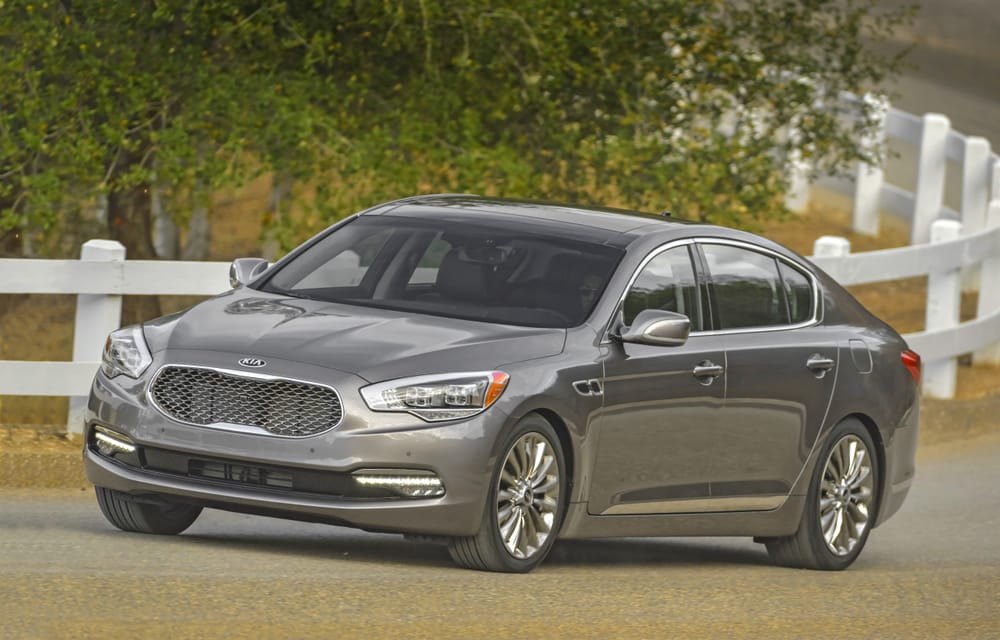
A left-front corner impact on a Kia K900 runs roughly $34,000 to repair properly — compared to the approximately $8,000 industry average for a collision repair. That figure, cited by I-CAR CEO John Van Alstyne during an appearance on the industry program Autoline This Week, made headlines when it was subsequently reported by the Detroit Free Press and picked up nationally by USA Today.
For collision repair professionals, none of it was surprising. For insurers and consumers still anchored to the "I can buff that out" era of auto repair, it's a wake-up call that's long overdue.
Technology Driving Costs Up
The Kia K900 Van Alstyne cited — referencing the 2017 model year generation — is a vehicle loaded with technology: extensive hot-stamped steel throughout the structure, 676 feet of structural adhesive, an "over-engineered" cooling system with an oversized radiator, a 600-watt cooling motor, and active aerodynamic air flaps. Put all of that in the path of a corner impact and you have a parts and labor equation that quickly outpaces typical estimates.
Van Alstyne's broader point wasn't to single out Kia, however. He was illustrating an industry-wide trend — one that only intensifies with each new model year as OEMs pack more sensors, structural adhesive, advanced steel grades, and driver-assistance systems into vehicles at every price point.
Not Just Luxury Vehicles
CARSTAR COO Dean Fisher offered perspective on how even mainstream repairs have grown in complexity. Removing a door mirror — a seemingly routine step during a paint repair — can cascade into recalibrations of the security system, interlocking systems, and blind-spot monitoring. Painting a bumper may require post-repair sensor validation to confirm the vehicle's safety systems continue to function as designed.
"If you paint over the sensors, you have just changed the trajectory of that sensor," Fisher said.
Headlights are another example. The modest cost of a headlight replacement a decade ago bears no resemblance to today's reality. LED units with adaptive steering functionality — the kind that physically turn into a corner — can run $800 to $2,000 per unit. That isn't padding on an estimate. That's the part price.
Van Alstyne himself has advocated with automakers for a "design for repair" philosophy. But until that becomes standard practice industry-wide, collision repairers are inheriting the complexity.
The OEM Procedures Argument
Fisher's comments also reinforced a point the collision repair industry has been making for years: following OEM repair procedures isn't optional, and shops that skip steps aren't doing cheaper repairs — they're doing dangerous ones.
His example was pointed. A technician who welds a vehicle's structural members closer together thinking it makes the repair stronger has actually compromised the crumple zone. Modern vehicle safety design depends on controlled deformation in a crash to protect occupants. A repair that makes the vehicle "stronger than the manufacturer wants it to be" disrupts that engineered response.
The irony is that CARSTAR — a national brand with DRP relationships across multiple insurers — is saying the same things independent shops have been saying for years. When a CARSTAR executive describes the repair complexity, it's harder to dismiss as exaggeration from a non-preferred facility.
The 'OMG Camry' and Rate Reality
P&L Consultants co-owner Larry Montanez and his late colleague James Moy produced a now-famous illustration of this cost reality: a hypothetical quarter-panel replacement on a 2010 Toyota Camry, built out with proper not-included operations, billing at the below-average rate of $44 per hour. The final estimate exceeded $12,400.
CCC's own 2015 data showed average body labor rates ranging from $47.23 to $80.55 per hour. The "OMG Camry" was built below those averages — yet the total still shocked many industry observers.
The document exists as a teaching tool for exactly this purpose: to show that when a shop follows OEM procedures and bills transparently for every step those procedures require, the numbers reflect reality.
Vehicle Collision Experts CEO Mark Olson often cites Gerber's Rex Dunn on the point that there is effectively only one correct way to fix a car. One shop may choose to absorb the cost of certain operations. Another may charge for them. But the work itself doesn't change based on that business decision.
What This Means for Your Shop
The gap between what insurance companies pay and what proper collision repair costs continues to widen as vehicle technology advances. Shops that absorb the difference aren't running lean — they're accepting liability and losing money simultaneously.
Billing properly for OEM-required procedures, not-included operations, and the calibrations modern vehicles demand is how shops protect themselves, their customers, and their businesses. The DEG's inquiry database and "Who Pays for What?" survey data exist to support those conversations with carriers. Use them.
