What a Post-Repair Inspection of a VW Golf Actually Looks Like — And Why It Matters
Post-repair inspections are sometimes dismissed as nitpicking — an exercise in finding problems that don't really matter. A Collision Hub "Repair University" two-part series documenting the inspection of a 2013 Volkswagen Golf provides a compelling counterargument.
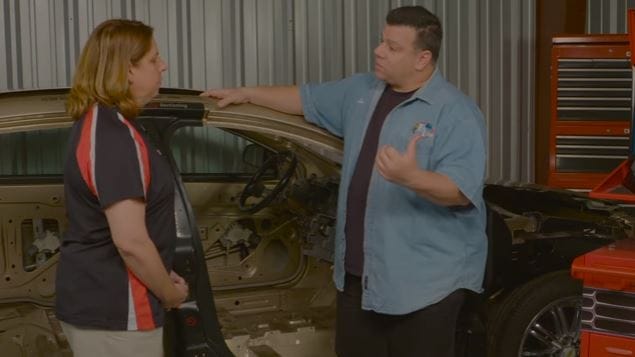
The inspection was conducted by P&L Consultants' Larry Montanez, with Collision Hub CEO Kristen Felder providing commentary and discussion throughout both segments. Montanez approached the vehicle without being told the details of the repair in advance — a deliberate choice to eliminate any bias in his initial assessment.
The Owner Was Happy. The Car Was Not Fine.
This is one of the more instructive aspects of the case: the vehicle owner was satisfied with her car. She didn't notice problems. She came forward voluntarily and agreed to have a professional evaluate the repair, but she wasn't coming in with a complaint.
That satisfaction turned out to be a poor indicator of repair quality.
Montanez's exterior assessment alone raised enough concerns to justify a partial tear-down for further examination. What that deeper look revealed demonstrated that customer perception and actual repair quality can be completely disconnected — and that this gap has real consequences for vehicle safety and structural integrity.
Without detailing the specific findings to preserve the educational value of viewing the original segments, the inspection documented both cosmetic failures and structural errors. These were not borderline issues. They were clear indicators that the vehicle had not been repaired to the standard it was represented to have met.
The Cycle Time Pressure Problem
Montanez's summary of the situation points directly at the broader structural problem in the industry:
"If people just took pride in their work and took the time — instead of worrying about cycle time and numbers and just worried about fixing the car the right way and checking in each department, you probably would never get into this situation here."
This observation cuts to the heart of a tension that pervades direct repair program relationships. DRP agreements often reward shops for speed and cost control: lower cycle times, fewer supplements, fewer part replacements, higher insurer satisfaction scores. These incentives are sometimes in direct conflict with the time and cost required to perform a thorough, procedure-based repair.
It's worth stating plainly: the problems found on this Golf didn't appear to result from negligence in the sense of carelessness about quality. They appeared to result from decisions made under exactly the kind of pressure that cycle time and cost management creates.
DRP vs. Non-DRP: Who Gets Corrected Faster?
Felder and Montanez discuss an important practical distinction in the video: a direct repair program shop operating under a first-party claim will typically hear from the insurer at the management level when a substandard repair is discovered. That feedback loop, while uncomfortable, is relatively fast.
For a non-DRP shop, the correction process can take far longer. The accountability mechanisms that DRP agreements create — whatever their other costs — do tend to accelerate the resolution of repair quality failures.
This doesn't mean DRP arrangements produce better repairs. The Golf case, if it involved a DRP shop, would suggest otherwise. But it does mean the consequences of a bad repair are surfaced more quickly within that system.
The Fundamental Question
The Golf inspection raises a challenge that every shop should sit with:
Is it better to get a vehicle back to a customer quickly — with corrections made faster when problems emerge — or to take the time required to get it right the first time?
For DRP critics, the answer is obvious: doing it right the first time is always preferable. A customer who drives a structurally compromised vehicle for weeks or months before a problem is identified has been harmed by that delay, regardless of how quickly a correction is eventually made.
The Golf case reinforces what post-repair inspection advocates have long argued: the customer's satisfaction is not a reliable measure of repair quality, and shops that substitute customer approval for professional quality control are operating without an adequate safety net — for the customer, and for themselves.
Why Post-Repair Inspections Belong in the Industry's Toolkit
The "Repair University" series on this Golf performs a genuine service for the industry. It demonstrates, step by step, what a professional post-repair inspection looks like — the methodology, the documentation, and the kind of findings that result when someone with technical expertise examines a repair without preconceptions.
Both insurers and collision repairers stand to benefit from understanding this process. Insurers who understand what inspection reveals may be better equipped to evaluate shop performance. Shops that understand inspection methodology are better positioned to identify their own quality gaps before a customer — or a court — discovers them instead.
