When OEM Certification Is Not Enough: A Post-Repair Armada Inspection Breakdown
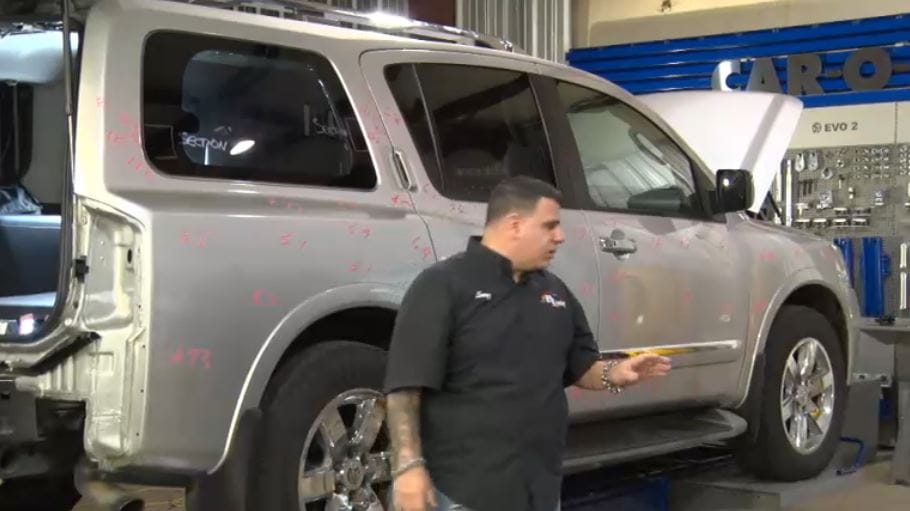
A collision repair shop can carry OEM certifications from multiple manufacturers — including European brands — and still deliver work that is unsafe, structurally compromised, and potentially fraudulent. A post-repair inspection of a 2011 Nissan Armada, examined on a "Repair University Live" broadcast by a panel of four industry experts, made that point with uncomfortable specificity.
The panel — Roger Cada (Accountable Estimatics), Kristen Felder (Collision Hub), Larry Montanez (P&L Consultants), and Jake Rodenroth (Collision Diagnostic Services) — went through the vehicle systematically and found problems at every level: electronics, body structure, corrosion protection, measurement, and paint.
"If the culture does not buy into a process … the customer loses," Cada said.
A Straightforward Vehicle Handled Poorly
Felder described the shop that performed the repair as arguably one of the best in its state — a non-DRP facility with multiple OEM certifications. The vehicle itself, a 2011 Nissan Armada, was as conventional as it gets. No exotic materials, no unusual European architecture. The insurer had paid for an OEM quarter panel — not aftermarket, not used.
"We can't even fix a steel car correctly," Montanez said.
The inspection was triggered by a customer complaint following a rear passenger-side impact. The vehicle had been back to the shop multiple times. Electronics issues that the shop dismissed as unrelated to the collision had persisted. Montanez pushed back on that dismissal directly: assuming a symptom isn't collision-related without evidence is an assumption made from someone else's life, he said. The same applies to visual panel gap assessments substituting for actual measurement.
"This isn't the 1970s," he said. Modern unibody structures can absorb and redistribute crash energy dramatically without any visible change in panel gaps — especially on open-rail vehicles.
The Electronics Failure
Rodenroth started with the scan and found four fault codes in the vehicle. Three of them traced back to a single root cause: the shop's apparent failure to reset the steering angle sensor following the battery disconnect that any quarter-panel replacement requires.
The steering angle sensor feeds into multiple safety-critical systems — braking, traction control, and the steering display in the backup camera. Leaving it uncalibrated doesn't mean those systems simply display a warning. It means they may operate incorrectly.
Battery disconnect procedure for the Armada also requires an "idle air relearn" — either via scan tool or a minimum 10-minute drive to allow the engine control system to adapt to local altitude. Rodenroth noted this wasn't done.
For shops that question whether older vehicles need scanning: the Armada is right at the average age of vehicles being repaired. At 6 to 7 years old, it carries electronics that require post-repair calibration just as much as a brand-new vehicle does. The vehicle's specific trim level layered in additional features the shop would have needed to identify through build data.
"We're fixing rolling computers," Felder said.
The Structural Failures
Montanez's assessment of the body work was damning. The shop had sectioned both the B-pillar and the quarter panel at incorrect locations — deviating from Nissan's OEM repair procedures.
Sectioning in the wrong location compromises crashworthiness. If the vehicle is in a future collision, the structural behavior the engineers designed and tested is no longer present. Cada added another dimension to the risk: the foam typically present in those structural areas becomes a fire hazard when a sectioned weld is placed in the wrong location.
"This shop could possibly wind up buying this customer a brand new car," Montanez said.
The outer wheelhouse showed no evidence of the replacement listed on the estimate — raising the question of whether the work was performed at all, which Montanez noted raised potential fraud concerns.
Backing plates exhibited extensive corrosion. Corrosion protection had not been applied. Welds were left raw.
The Measurement Findings
When the panel took measurements, the rear rails were bent twice. The vehicle Montanez described as "a little messed up" turned out to have an S-shaped rear structure. The front also had multiple measurements off.
"The frame has some issues to it," Montanez said, assessing the vehicle as likely unsafe to drive.
He acknowledged that without deeper investigation, he couldn't determine whether all of the frame damage was attributable to the specific collision being repaired — which itself illustrates the necessity of premeasuring every vehicle before work begins. If the shop had documented the vehicle's pre-repair condition, the conversation about what damage was new versus pre-existing would have been much cleaner.
The Paint Work
On top of everything else, the refinishing work showed:
- Inconsistent spray pattern and inadequate substrate prep throughout the body
- Adhesive misapplied throughout the interior of the quarter panel area, not limited to the wheel well per Nissan's procedures
- Primer overspray on the carpet and the entire wiring harness
"We've got primer on the entire wiring harness," Felder said.
What This Means for Quality Control
The Armada case is a useful illustration because it eliminates the excuses typically available when a bad repair is discovered. This wasn't an exotic vehicle. The insurer paid for proper OEM parts. The shop had the certifications. And the repair was still wrong in ways that could lead to structural failure, electronics malfunction, fire risk, and fraud liability.
Certifications create a floor of capability. They don't enforce a culture of compliance. Shops that hold certifications but don't integrate OEM procedures into their day-to-day workflow are collecting credentials without delivering what those credentials promise.
Post-repair inspections, pre-repair measurements, mandatory scanning, and systematic quality checks aren't paperwork exercises. The Armada is what happens without them.
