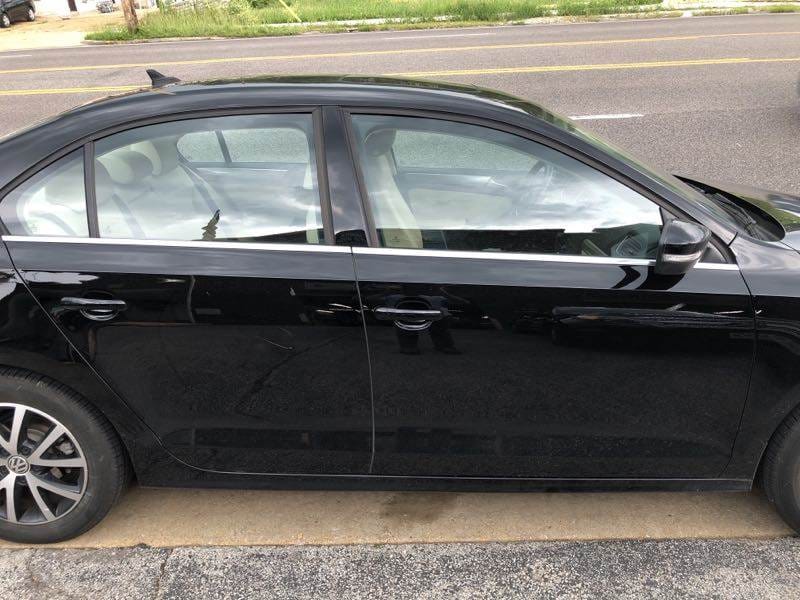
When the Appraisal Clause Process Is Corrupted: A Missouri VW Jetta Repair Dispute
The appraisal clause exists as a contractual mechanism to resolve disputes between policyholders and insurers about repair costs. When it works as intended, both sides hire independent appraisers, those appraisers either reach agreement or bring in a mutually selected umpire, and the resulting number is binding. The process is supposed to be independent of the insurer's preferences once invoked.
A 2019 case involving a Missouri policyholder, her 2017 Volkswagen Jetta SE, and Safeco Insurance documents what happens when that independence is compromised — and provides a recorded firsthand account of what pressuring an independent appraiser looks like in practice.
The Original Dispute
Suzanne Corbett brought her 2017 Volkswagen Jetta SE TSI to Hunter Auto Body in St. Louis in June 2019 for what she expected to be a minor repair. The shop found three dents on the quarter panel in addition to the scratch and dent she had identified.
Hunter Auto Body general manager Kyle Motzkus explained to Corbett upfront that refinishing to Volkswagen standards — carrying paint to the panel edge of a uniside, then to the seamless roof, and then "carrying over" because of the absence of a seam on the other side — could push what appeared to be a $3,000–$4,000 job past $9,000. Safeco's initial estimate came in at $982.67.
Hunter's initial estimate was $8,096.70.
Corbett invoked the appraisal clause in her Safeco policy. Her appraiser, P&L Consultants co-owner Larry Montanez, submitted a detailed damage report for $11,326.38, documenting every operation with support from Volkswagen's official repair procedures (VWAG erWin documentation).
The Agreement — And What Happened Next
By October 2019, after months of process complications, Montanez and SCA Insurance Services appraiser Jason Boschert reached a consensus figure of $8,043.06. Montanez confirmed his acceptance on October 24, 2019.
Under Corbett's policy language — standard appraisal clause language — this agreement between both parties' appointed appraisers should have been binding:
"A decision agreed to by any two will be binding."
Boschert emailed Safeco senior claims specialist Matthew Meyer on November 6, 2019: "I reached the agreed price with Larry Montanez the appraiser that the insured hired to handle the rta."
Meyer's response to Corbett several days earlier had been to tell her that Safeco was awaiting review from its field attorney — and to ask, apparently with no knowledge of the appraisal clause process: "What is an RTA?"
The Reversal
On November 10, 2019, Boschert issued a new appraisal for $1,643.80 — a reduction of more than $6,400 from the agreed price.
Hunter Auto Body contacted Boschert directly, with Montanez's authorization, to find out what had happened. The November 11 phone call, recorded under Missouri's single-party consent law, documented Boschert's account.
Boschert said he had received a call stating that the client — Safeco — was "pissed off" because he hadn't given them an opportunity to "review and approve" the estimate before agreeing to it.
He described being "coerced." When Motzkus pressed him on whether he had changed the appraisal specifically because Safeco directed him to, Boschert replied: "In a sense. I was told it could affect the volume for every state in the union, so to speak, with this particular client."
"They basically strong-armed you into completely rewriting it," Motzkus said.
"More or less, yes," Boschert replied.
Boschert acknowledged he couldn't understand why he had been involved at all "if I'm gonna be told what to do." He called the process "not how the whole process is supposed to go."
SCA and Safeco's Response
SCA Operations Executive Vice President Jon Gironda issued a statement disputing the account: "The insurance carrier, in this case Safeco, did not attempt in any way to manipulate or control the outcome of this appraisal clause claim. The shop advocate circumvented established processes by reaching out directly to the appraiser and recording him."
Boschert himself issued a statement consistent with Gironda's version: "I was not pressured by anyone at Safeco or SCA to change any of my appraisals."
Liberty Mutual's media relations director Glenn Greenberg declined to comment on the specifics of the claim, stating only that the company would "look into the matter and address it appropriately."
On November 21, 2019, a different SCA representative produced a third estimate — for $4,512.23. Still approximately $3,500 short of the agreed price.
The Process Complications That Preceded All of This
The summer 2019 leadup to the agreement was itself troubled. An SCA subordinate initially produced a $1,081.32 estimate, referring Corbett to a Liberty Mutual adjuster for questions and stating the estimate was written "using the guidelines set forth by the insurance carrier" — language that suggested from the start that the appraisal process wasn't being treated as independent.
Montanez wrote to the SCA employee, attached his $11,326.38 damage report, and asked for contact about any differences. He received no reply for a week before following up again.
When Boschert eventually replied, he characterized Montanez's estimate as containing "a lot of fluff" and questioned whether the quarter panel required replacement. Montanez's estimate actually wrote for repair, not replacement — a factual error in Boschert's characterization. Montanez requested that Boschert provide a list of any disputed operations, which Boschert could then review against the supporting procedural documentation.
Boschert went silent until Motzkus contacted him in October 2019, after which the two sides reached the $8,043.06 agreement.
What This Case Reveals About the RTA Process
The appraisal clause is a consumer protection mechanism. It's meant to provide policyholders with an independent avenue for dispute resolution — a way to ensure that repair cost disagreements are settled by technical and market expertise rather than insurer authority.
When an insurer's chosen appraiser is subject to business volume pressure, the independence that gives the process its legitimacy evaporates. The mechanism becomes a formality rather than a protection.
Corbett's experience — half a year without her car repaired, a binding agreement disavowed, a second and third appraisal at fractions of the agreed amount — illustrates what that looks like from the policyholder's perspective. She ultimately switched her home and auto insurance to a different carrier.
For collision repairers navigating similar situations: document everything, understand the policy language, and recognize that an agreed appraisal that an insurer refuses to honor may require escalation beyond claims management — potentially including state Department of Insurance complaint filings or legal counsel.
