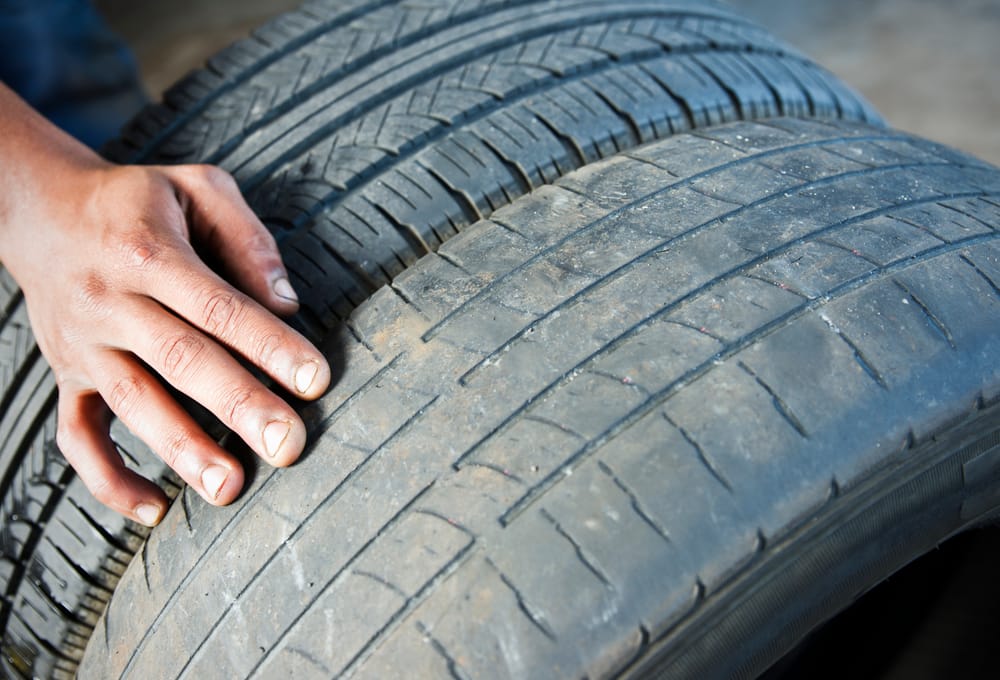
Why Auto Body Shops Must Scrutinize Tire Age and Say No to Shaving
Tires are the single component of any vehicle that maintains constant contact with the road, and according to I-CAR curriculum and product development director Josh McFarlin, they represent the number-one safety system on any vehicle. That designation carries substantial weight in a collision repair context, where shops routinely handle tire-related decisions as part of post-accident reconditioning. Understanding what can go wrong with tires — and what practices are outright dangerous — is an essential part of responsible repair work.
The National Highway Traffic Safety Administration has documented the scope of the tire safety problem: in 2015 alone, tire-related incidents were associated with an estimated 719 fatalities and nearly 20,000 injuries. These aren't abstract statistics for collision repairers — they represent the real-world consequences of placing a compromised tire back on a vehicle and returning it to a customer.
Checking Production Dates Before Installation
One of the most overlooked steps in tire handling is verifying the manufacturing date of any tire before it goes on a customer's vehicle. Larry Montanez of P&L Consultants has explained that the DOT Tire Identification Number printed on every tire encodes this information in its final four digits: the first two represent the production week, and the last two represent the year. A code reading 5217, for example, would indicate the tire was manufactured in the 52nd week of 2017.
Tires that have been sitting in a warehouse or storage facility for more than three years carry elevated risk because the rubber compounds begin to degrade regardless of visible tread condition. NHTSA has flagged this "tire aging" phenomenon as particularly problematic in warm climates, such as the Sun Belt, where heat accelerates rubber deterioration. Spare tires are another common offender — often unused for years and assumed to be in good condition.
Most tire manufacturers specify that all tires be replaced after six to ten years from the production date, even if they appear undamaged. Shops sourcing replacement tires from suppliers should verify storage conditions — exposure to heat, sunlight, and humidity all affect tire longevity — and cross-reference OEM or tire manufacturer specifications before installation.
Tread Measurement: Leave the Penny Behind
When assessing tread depth — a task that some direct repair program agreements formally require — professionals should use calibrated digital tread gauges rather than improvised coin tests. Database Enhancement Gateway Administrator Danny Gredinberg has been blunt about this: a professional shop should use professional tools.
New tires commonly arrive with tread depths of 10/32 to 11/32 of an inch, and most U.S. states legally require replacement once a tire drops to 2/32 of an inch. Digital gauges provide a straightforward numerical reading, removing guesswork and providing documentation that supports accurate estimating. Some DRP agreements even specify which gauge must be used, so shops should be aware of contract requirements.
The Practice of Tire Shaving: Just Don't
Perhaps the most critical topic in the collision repair tire discussion is the growing — and alarming — practice of tire shaving as a cost-saving measure. Industry experts have described increasingly hearing requests from customers or insurers to shave tires instead of replacing them when manufacturer specifications call for a full set.
Tire shaving — mechanically reducing the diameter of a tire — is a technique developed for race applications on controlled circuits. It has no legitimate place on commercial or customer vehicles operated on public roads.
Tire manufacturer specifications commonly require that pairs of tires or all four tires be replaced when even one wheel is involved in a collision or requires service. When a customer balks at the cost and a shop or insurer suggests shaving to reduce diameter differences, the shop assumes enormous legal exposure. Voiding a tire manufacturer's warranty is the least of the concerns — the more serious issue is liability if a shaved tire fails.
Collision Hub CEO Kristen Felder has been unequivocal: "The legality of that is just not good at all." An insurer wanting to warrant the shaved tires doesn't change the equation. The manufacturer warranty is voided, the repair standard has been bypassed, and the shop has signed off on a condition it shouldn't have.
Continental's tire warranty language makes the risk explicit: "Alteration" voids the warranty, and "ignoring any of the safety and information contained in this limited warranty and Adjustment Policy may result in tire failure, causing serious injury or death."
The Automotive Maintenance Repair Association's Uniform Inspection Communication Standards back this up on the mechanical service side: when four-wheel or all-wheel drive vehicles show excessive diameter differences between tires — defined as exceeding manufacturer specifications — replacement is listed as required, not merely suggested.
Where to Find the Right Answers
Unlike many OEM procedures that live on a manufacturer's service portal, tire handling guidance for collision repairers may not reside in the obvious places. Gredinberg has pointed out that critical information about proper tire handling and warranty requirements is sometimes found in the vehicle owner's manual or in a separate tire information document provided to the original owner. Shops should check the glove compartment as a first step before escalating to an OEM website or contacting a tire manufacturer representative.
When an insurer or customer asks a shop to perform a procedure that isn't supported by the OEM or tire manufacturer, Montanez's advice is straightforward: "Send it down the block." A third party — whether an insurer or customer — cannot compel a collision repairer to deviate from manufacturer-specified repair procedures, and no business justification exists for taking on the liability of a compromised tire.
