The Myth That Won't Die
There is no universal "industry standard" for collision repair. That may seem obvious to anyone working in the trade, but the misconception persists — most recently in legislative debates in Indiana and Rhode Island — and it's worth understanding precisely why the concept doesn't hold up.
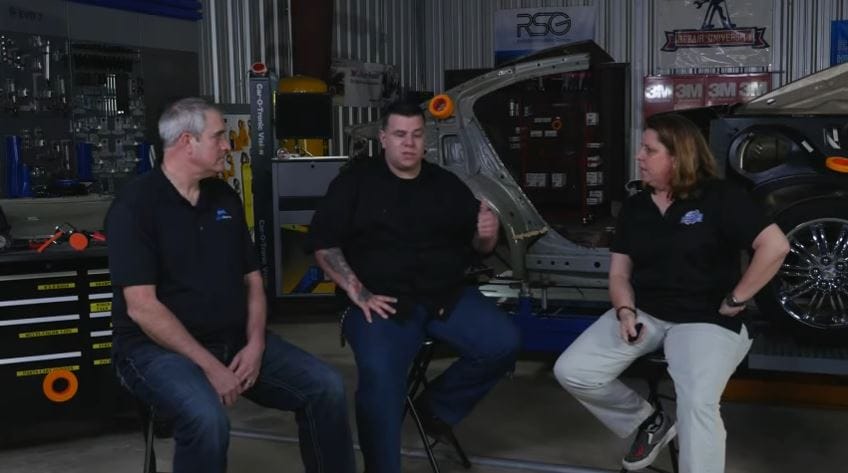
"There is no industry standard," said Larry Montanez, co-owner of P&L Consultants, speaking during a Collision Hub "Repair University Live" broadcast. "The industry standard's set by the manufacturer for each and every vehicle, each and every model."
OEM Procedures Are Not Interchangeable
The reason a catch-all standard can't exist is simple: repair requirements are vehicle-specific, and they change constantly. OEM procedures can differ not just between makes and models, but between model years — and sometimes within a single model year as a manufacturer issues mid-cycle updates.
Even something as basic as a battery disconnect procedure can vary across multiple vehicle lines from the same manufacturer. Repair specifications that apply to a 2015 Honda Civic may not apply to a 2015 Honda Accord or an Acura MDX. Montanez put it directly: "Coming up with an industry standard is a lie. It just shows your ignorance."
That's why industry trainers and repair procedure consultants consistently advise repairers to look up OEM instructions fresh for every single vehicle — not to rely on prior experience with the same model, not to assume the procedures are the same across similar trims.
Where the Concept Comes From
Collision Hub CEO Kristen Felder, who spent years working in the insurance industry before switching to the collision repair side, traced the "industry standard" argument back to homeowner insurance. In residential construction, case law has supported the idea of a consistent standard method for tasks like framing or roofing.
"But trying to apply that to automotive was just kind of hogwash," she said.
If 19 out of 20 auto body shops lack the proper equipment or training to perform a specific repair, that doesn't make their approach the standard — it makes it the norm, and the norm isn't good enough. "Those other 19 shops shouldn't be getting any work," Felder said. The insurance industry's role, she argued, is not to pay down to the lowest common denominator but to ensure repairs meet the proper standard: "The OE is the industry standard, period."
Mark Olson, CEO of Vehicle Collision Experts, offered a more sympathetic read on why the concept has traction among policymakers unfamiliar with the trade: it sounds reasonable to someone used to homeowner insurance frameworks. He noted that comments like "we just need a chart that tells us everything we need to know about every car" reflect a genuine wish for simplicity in what has become an extraordinarily complex trade.
"That chart can't be built," Olson said.
Industry Groups and I-CAR Agree
The position held by Felder, Olson, and Montanez — that OEM repair procedures constitute the actual standard — is not a fringe view. It is the stated position of the three major auto body repair trade associations and of I-CAR, the industry's primary training body.
Despite that consensus, the "industry standard" argument has continued to surface as a legislative strategy. In Indiana, insurer lobbyists proposed amendments framing alternatives to OEM procedures as equally legitimate. In Rhode Island, a representative opposing Senate Bill 2679 — legislation that would have required insurers to specify OEM-compliant procedures — argued that such alternatives exist.
Bill supporter Wayne Weikel of the Alliance of Automobile Manufacturers pushed back on that framing: "There was a time when 'industry practices' were good enough to repair 9 out of 10 cars that rolled into auto body shops. That day has passed. The only way a modern vehicle can be properly restored to pre-loss condition with any sort of confidence is for technicians to follow OE repair procedures — every time."
The Bottom Line for Shops
For collision repairers, the practical takeaway is straightforward: there is no shortcut document, no universal procedure list, no industry-standard chart that substitutes for pulling OEM repair procedures for each vehicle before touching it. Vehicle technology has become too varied and too complex for any other approach to hold up under scrutiny — whether in a reinspection, a lawsuit, or a conversation with a certification auditor.
