Why Vehicle Clipping Is No Longer an Acceptable Repair Method — And What to Do Instead
The idea of "clipping" a vehicle — grafting a salvage front or rear section onto a damaged car — was once a viable, if imprecise, repair option. The 1980s collision repair industry developed general sectioning guidelines that worked reasonably well for the mild-steel, pre-IIHS vehicles of that era. Those guidelines no longer apply. Industry experts have been saying so for years, and the OEM documentation backs them up conclusively.
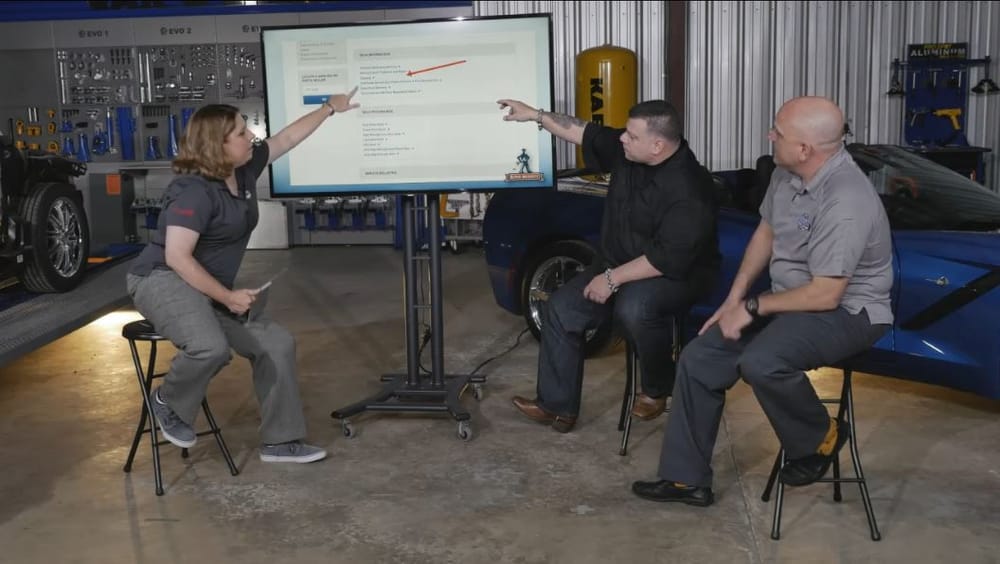
"Those old general sectioning guidelines that were developed in the '80s are not applicable on today's vehicles," said I-CAR industry technical relations director Jason Bartanen during a "Repair University Live" session demonstrating OEM collision repair procedure usage through a General Motors case study.
Why the Old Rules Don't Transfer
When clipping procedures were developed, the Insurance Institute for Highway Safety small-offset crash test didn't exist. Modern crash test programs demand that vehicles absorb and redirect crash energy in precisely engineered ways — energy management that depends on the structural integrity of the entire vehicle, not individual sections treated in isolation.
Today's vehicles are also built from materials that require entirely different treatment than the mild steel used in the 1980s. High-strength steel, ultra-high-strength steel, aluminum alloys, and mixed-material assemblies all have specific procedures for where they can be cut, how they can be joined, and what temperatures and methods are permissible.
Even what appears to be a mild-steel exterior panel can be bonded to a higher-strength structural element directly beneath it. Cut in the wrong location or join in an unapproved method, and you may have undermined a component you never directly touched.
What GM's Own Position Statements Say
General Motors has addressed this directly and in writing. A 2013 statement explicitly bans clipping; an updated version from August 2016 elaborates further on why. Montanez summarized the message plainly: "They're saying, 'Don't do what you want.'"
The GM statements are consistent with a broader OEM consensus: vehicle manufacturers do not sanction general clipping procedures developed outside their own engineering specifications, regardless of what a repairer may believe about their skill level or the quality of the outcome.
When reminded that many shops defer to I-CAR for repair method guidance, Bartanen was equally clear: "Again, I-CAR says, 'Follow vehicle maker instructions.'"
Limited Sectioning Is Still Possible — With OEM Authorization
This doesn't mean that sectioning is categorically prohibited. Smaller-scale sectioning remains viable in specific situations — but only when the vehicle's manufacturer has published a procedure explicitly approving the section, specifying the location, and defining the joining method.
The key phrase is "OEM-approved." There is no blanket sectioning procedure that covers all vehicles, all models, or all repair scenarios. If a manufacturer hasn't written and published a procedure for a specific section on a specific model, then that section cannot be performed to a professional standard.
The Butt Joint Evolution and What Repairers Get Wrong
Another area where outdated habits persist: the use of butt joints with backing plates. Many technicians were trained to use backing plates behind butt weld joints as a matter of course. GM, like other manufacturers, has moved away from this method. Many current repair procedures call for open butt joints using silicon bronze welding — no backing plate.
Montanez explained the history bluntly: backing plates were required years ago because shop welding quality was poor, and the plate provided a larger heat sink to compensate. "It's not because it makes it stronger, it's because you guys suck at welding," he said. As welding technology and training improved, the engineering reason for the backing plate disappeared — and corrosion research revealed that the plate itself creates additional long-term problems at the joint.
Reinstalling a backing plate in violation of OEM procedures because it's what you've always done isn't skill — it's inertia. And it's a repair procedure violation with potential structural and corrosion consequences.
Battery Disconnect Is Not Optional
One more area where "I've always done it this way" creates serious risk: battery disconnection before welding or electrical work.
OEM disconnect procedures can be extensive. Some specify that radio presets must be memorized and restored, that the radio security code must be obtained in advance, and that every system connected to the battery must be treated carefully through the process.
Some shops skip these steps, relying on surge protectors to maintain enough charge to keep systems stable during repairs. This is dangerous.
"If you listen to that, you're completely liable for the airbags being deployed," Montanez said. A surge protector holds enough charge to fire airbags — even a standard 9-volt battery contains sufficient energy to trigger a deployment. OEMs require disconnecting the airbag control module specifically because connected accelerometers and dangling wiring can inadvertently trigger bags during the repair process.
Felder summarized the standard of care for advice from outside the OEM documentation: "The best advice is not to take repair advice from the tool truck guy."
The Professional Standard Has Changed
Repairers who still justify clipping or unapproved sectioning based on "I'm a good welder" are applying a standard that doesn't reflect the vehicles on the road today. The engineering complexity, material specifications, and safety systems in modern vehicles require procedure-based repairs — not skill-based improvisation.
The consequences of getting this wrong aren't limited to re-repairs. Structural failures, ADAS malfunctions, and airbag deployment failures can cause serious injury. And courts are increasingly capable of understanding the difference between a shop that followed OEM procedures and one that didn't.
